What causes a light switch to feel warm?
Damaged contacts can create heat at a light switch. Loose wiring, high wattage, and an overloaded circuit can add to the problem. Service Electric checks the switch, box, connected fixture, and circuit before repairing the fault. Stop using the switch if you notice burning odor, sparks, smoke, or dark marks.
What should be checked before switch repair is scheduled?
The switch symptom, connected fixture, access to the box, and circuit behavior should be checked first. Note heat, flickering, buzzing, bulb failure, or breaker trips. Photos of the wall plate and fixture can help describe the issue, but don't remove the cover or handle exposed wiring.
Who is a good fit for switch repair, and who needs another service?
Homes and businesses with a faulty wall switch are good fits for switch repair. A panel upgrade, service entrance upgrade, or broader wiring repair fits when testing finds a capacity or circuit problem. We explain the difference after checking the switch and the connected load.
What happens at each stage of switch repair?
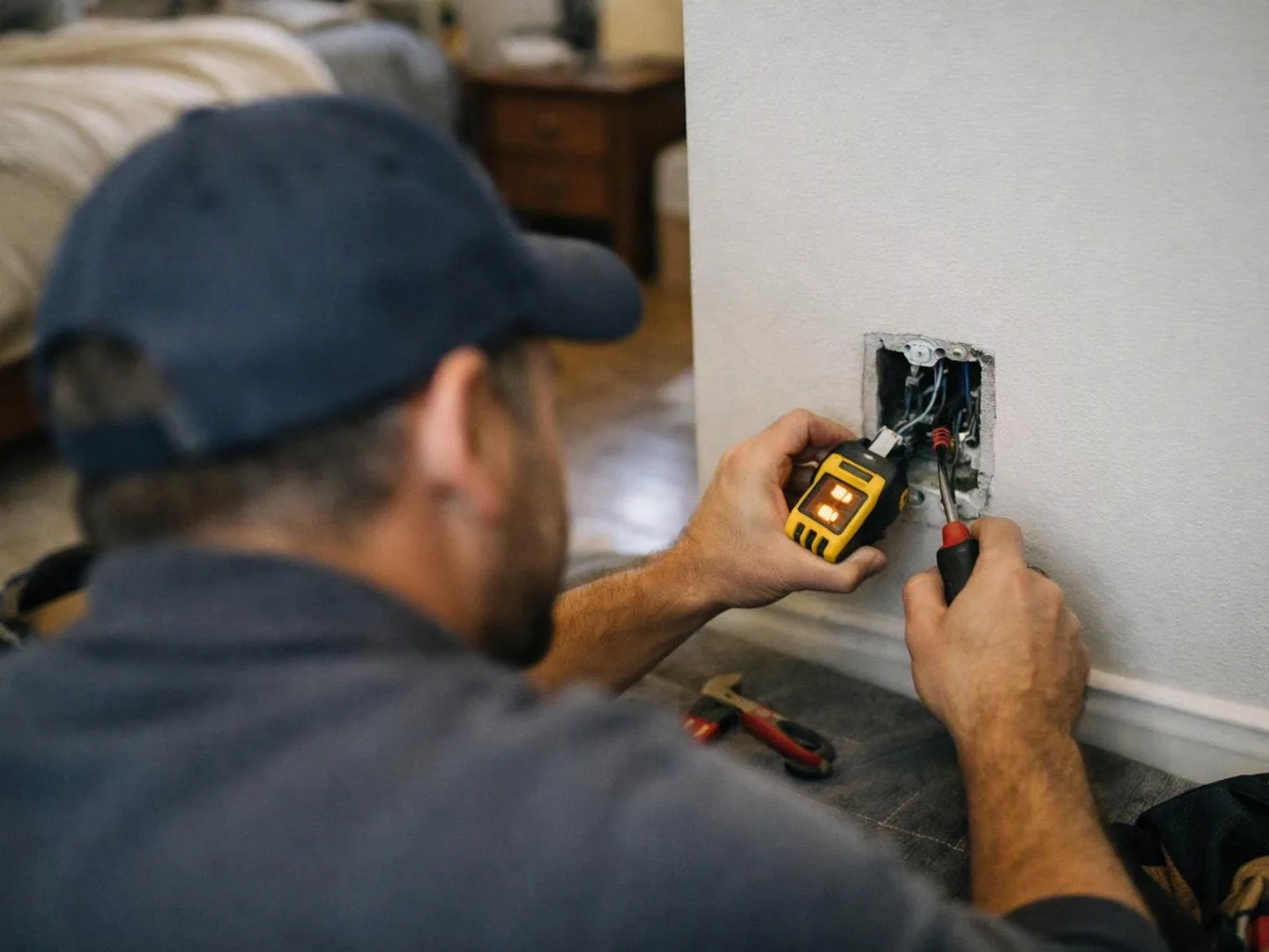
The work starts with symptom review, circuit isolation, switch-box inspection, circuit tracing, repair, and testing. We check the connected fixture when the switch symptom points beyond the wall control. The final test confirms that the switch and light respond after the repair.
Which parts can change the repair estimate?
The switch type, wiring condition, box access, connected fixture, and circuit fault can change the estimate. A simple switch connection differs from work that needs circuit tracing or related wiring repair. We provide a free estimate after reviewing the conditions at the switch.
When does a warm switch become an urgent electrical concern?
A warm switch becomes urgent when it shows burning odor, smoke, sparks, dark marks, or repeated breaker trips. Turn off the circuit if you can do so safely and keep people away from the switch. We handle urgent electrical concerns around the clock.
Why does a switch feel warm after a bulb change?
High wattage can create excess heat at a switch after a bulb change. The bulb, fixture, switch rating, wiring, and circuit load all need review. We check those parts and explain whether the issue stays with the switch or needs broader electrical troubleshooting.