Signs Your Electrical Panel May Need Repair or an Upgrade
Electrical panel warning signs can include repeated breaker trips, burning odors, buzzing, visible damage, heat, corrosion, or circuits that no longer meet household demand. Service Electric inspects the panel, identifies whether circuit breaker repair, panel repair, or an upgrade fits the condition, and provides Free Estimates Available.
Get a Free Estimate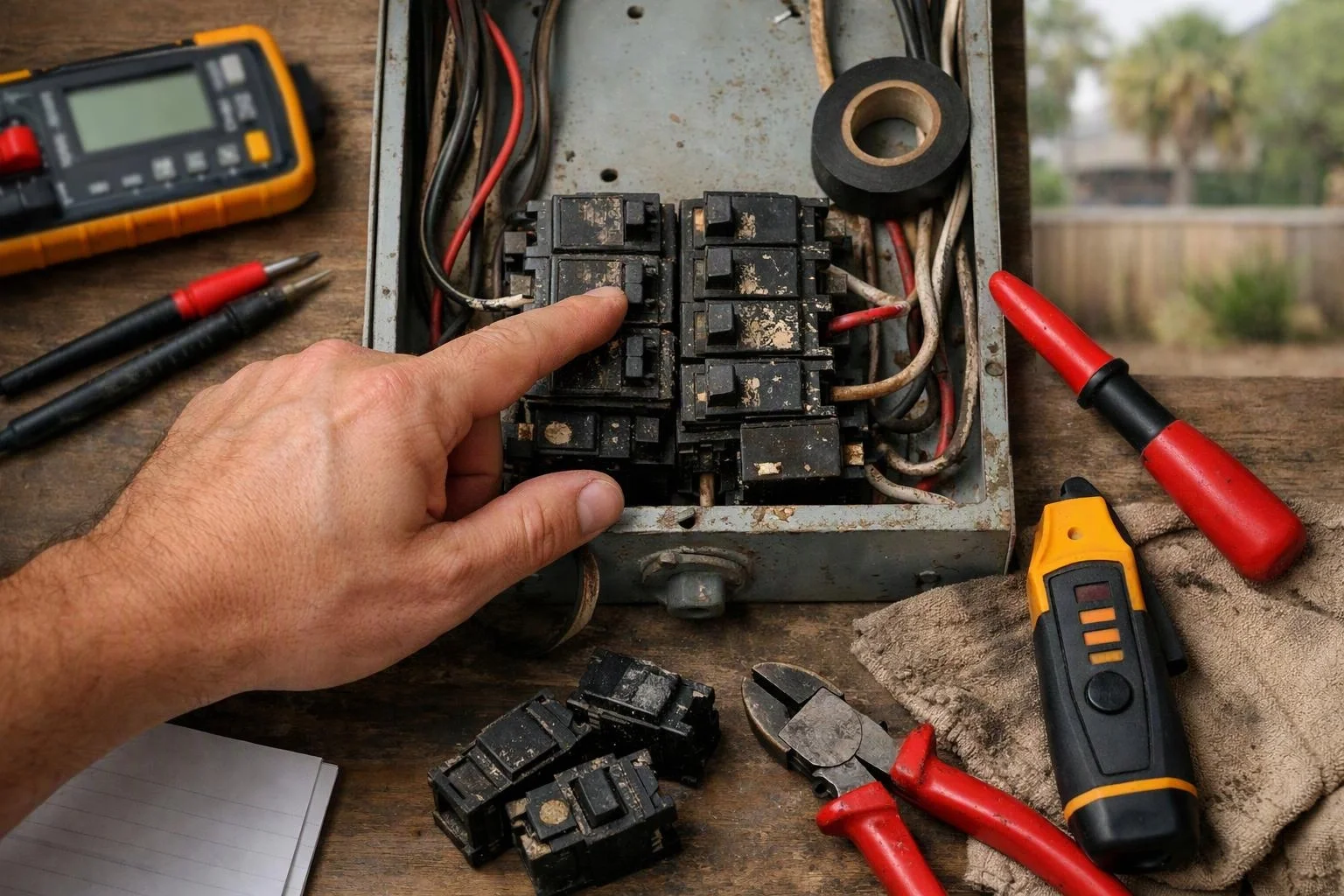
Which Signs Mean an Electrical Panel Needs Attention?
An electrical panel needs attention when it shows heat, burning odors, unusual sounds, visible damage, corrosion, repeated breaker trips, or signs that circuits cannot support the electrical load.
What Should You Do When a Circuit Breaker Trips?
A tripped circuit breaker should be reset only after you unplug affected loads and check for an obvious temporary overload.
Turn off or unplug equipment connected to the affected circuit. Keep your hands dry and stand clear of the panel while you move the breaker fully to the off position and then back on.
A breaker that trips again may be responding to a short circuit, ground fault, or continuing overload. Repeated trips require Service Electric to inspect the circuit and panel instead of repeated resetting.
When Does a Circuit Breaker Need Repair?
A circuit breaker may need repair when it will not reset, trips without a clear load-related cause, feels hot, makes noise, or shows damage.
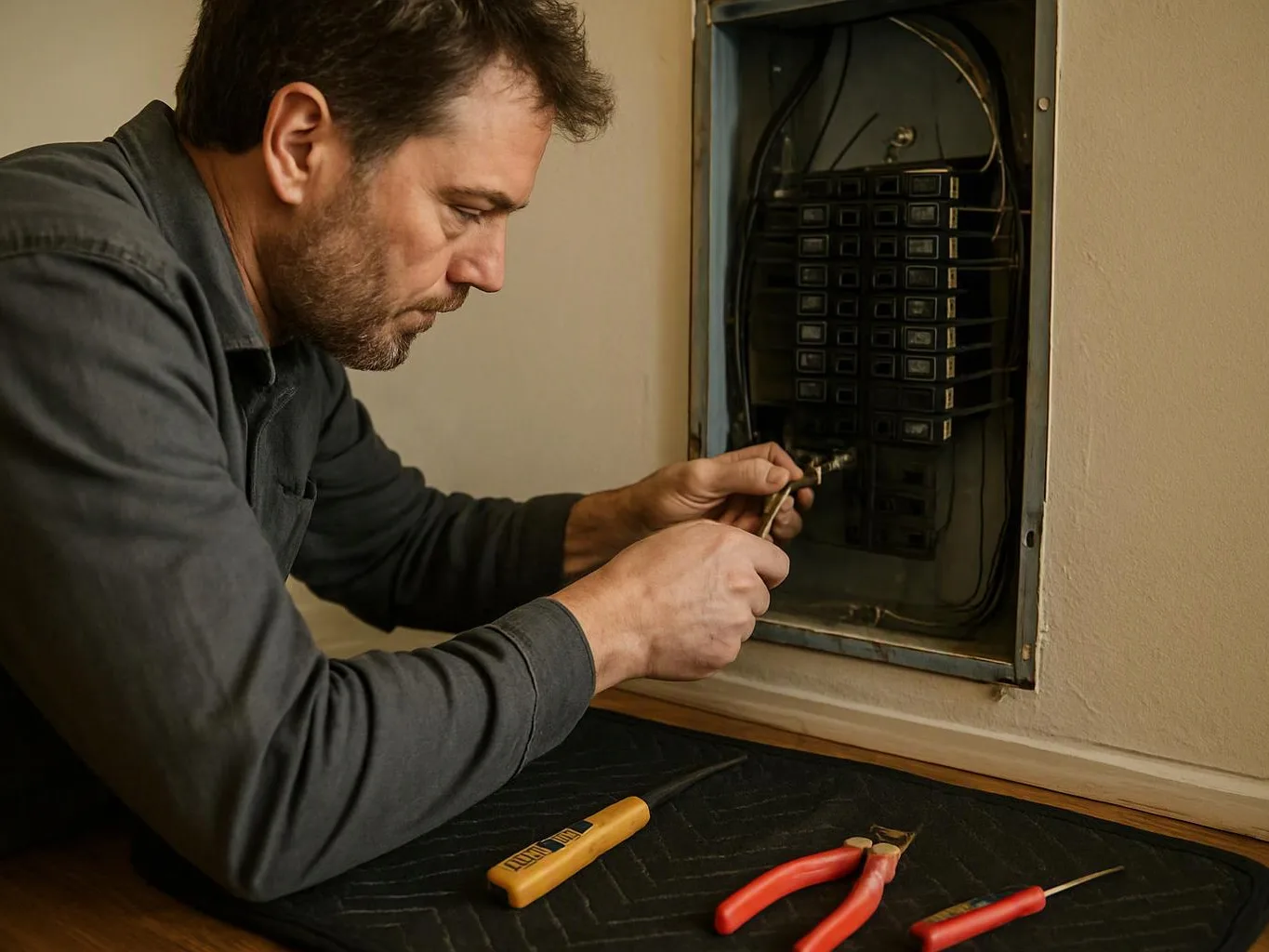
We check the breaker handle, breaker connection, surrounding wiring, and signs of overheating. Our team also looks for an electrical fault that could be causing the breaker to operate.
Circuit breaker repair may involve correcting a connection or replacing a damaged component. We identify the cause before completing work so the same fault does not remain in the circuit.
Does the Electrical Panel Need Repair or an Upgrade?
Electrical panel repair addresses a localized fault or damaged component, while an electrical panel upgrade addresses insufficient capacity, outdated equipment, or broader system limitations.
| Condition | Likely direction | What we assess |
|---|---|---|
| One damaged breaker or localized connection | Electrical panel repair or circuit breaker repair | Breaker condition, connection, wiring, and cause of the fault |
| Panel damage that affects safe operation | Repair or panel replacement, based on condition | Panel enclosure, busbar, breakers, and service equipment |
| Insufficient capacity for the electrical load | Electrical panel upgrade | Circuit capacity, electrical demand, wiring, and service capacity |
| Outdated equipment with broader limitations | Electrical panel upgrade | Panel compatibility, grounding, service conductors, and code requirements |
We use the panel condition and electrical demand to separate a repair from a broader upgrade plan. A panel that appears functional may still have capacity or compatibility limits.
How We Inspect an Electrical Panel Before Recommending Work
Service Electric inspects the panel enclosure, breakers, connections, wiring, grounding, circuit labeling, and electrical demand before recommending repair or an upgrade.
What Can You Safely Check Yourself?
A homeowner inspection can cover breaker positions, unusual sounds, odors, heat, and visible damage without removing the panel cover or touching exposed electrical components.
You can note which breaker moved, what equipment was operating, and whether lights were flickering. Keep the panel area clear so our team has safe access for an inspection.
Do not touch exposed wiring, the busbar, service conductors, or loose parts. Do not remove the panel cover, and do not keep resetting a breaker that trips repeatedly.
DIY Checks Versus Calling Service Electric
Electrical safety determines which tasks belong to you and which tasks require Service Electric. Simple observations can help us understand the symptom, but panel work requires inspection of energized electrical equipment.
| Factor | What you can do yourself | What we do |
|---|---|---|
| Circuit breaker reset | Unplug affected loads and reset once if the cause appears to be a temporary overload. | Inspect repeated trips, the circuit, and the panel when the breaker trips again. |
| Electrical panel inspection | Observe the outside of the panel and report sounds, odors, heat, or visible damage. | Inspect the panel enclosure, breakers, busbar, wiring, grounding, and electrical demand. |
| Circuit breaker repair | Do not remove the breaker or handle exposed components. | Find the electrical fault and repair or replace the affected component as appropriate. |
| Panel repair or upgrade | Gather appliance information and panel documentation. | Determine whether electrical panel repair or an electrical panel upgrade fits the findings. |
What Changes the Scope of Panel Repair or Upgrade Work?
The scope of electrical panel work depends on the failed component, panel condition, available circuit capacity, wiring condition, service equipment, and compatibility with the property.
We also consider whether the existing panel can support the electrical load from present and planned appliances. Code requirements, grounding, service capacity, and panel compatibility can affect the work needed.
Our quote explains the recommended repair or upgrade, the affected equipment, and the work included. You can request an assessment through Electrical Panel Repair.
How to Prepare for an Electrical Panel Inspection
Electrical panel inspection preparation helps us connect the visible symptoms with the panel's electrical demand and operating history.
How to Request an Electrical Panel Assessment
An electrical panel assessment lets Service Electric review reported symptoms and explain whether electrical panel repair, an electrical panel upgrade, or circuit breaker repair fits the findings.
Tell us what you observed, which circuits are affected, and whether the issue involves heat, odor, noise, visible damage, or repeated trips. We use those details to plan the inspection and explain the recommended scope.
Contact Service Electric to discuss the panel condition and request an assessment with Free Estimates Available.
Questions About Electrical Panel Repair and Upgrades
Can a breaker keep tripping because the electrical panel is bad?
Yes, a breaker can keep tripping because of a failing breaker, damaged panel, overloaded circuit, short circuit, or ground fault. Service Electric checks the circuit and panel to identify the cause.
Is a buzzing electrical panel dangerous?
Yes, a buzzing electrical panel can indicate a loose connection, failing breaker, or other electrical fault. Avoid touching the panel and contact Service Electric for an inspection.
What does a burning smell from an electrical panel mean?
A burning smell from an electrical panel can mean that a connection, breaker, wiring, or panel component is overheating. Stop using affected equipment and arrange an inspection.
Can an old fuse box be repaired?
An old fuse box may be repairable when the problem is localized, but its condition, compatibility, capacity, wiring, and service equipment determine whether repair or replacement fits. We inspect the fuse panel before recommending the next step.
What should I avoid touching inside an electrical panel?
Avoid touching exposed wiring, the busbar, service conductors, breaker connections, and any damaged or loose components inside an electrical panel. Do not remove the panel cover; contact Service Electric for the inspection.