What Is a Tripped Breaker?
A tripped breaker is a circuit breaker that has opened a circuit after sensing excessive current or a fault. The interruption stops power from reaching connected wiring and devices. A breaker may trip because of an overload, short circuit, or repeated heat buildup. Resetting the handle does not remove the underlying electrical problem.
Quick Facts About Tripped Breaker
Category
Circuit protection condition
Used for
Interrupting unsafe current
Common confusion
Power outage or failed breaker
Also called
Breaker Trip, Tripped circuit breaker
Often discussed with
Circuit Breaker Repair, Electrical Troubleshooting
Key Takeaways About Tripped Breaker
- The handle may rest between the on and off positions.
- Repeated trips point to a continuing circuit problem.
- A tripped breaker is not the same as a power outage.
How Tripped Breaker Works
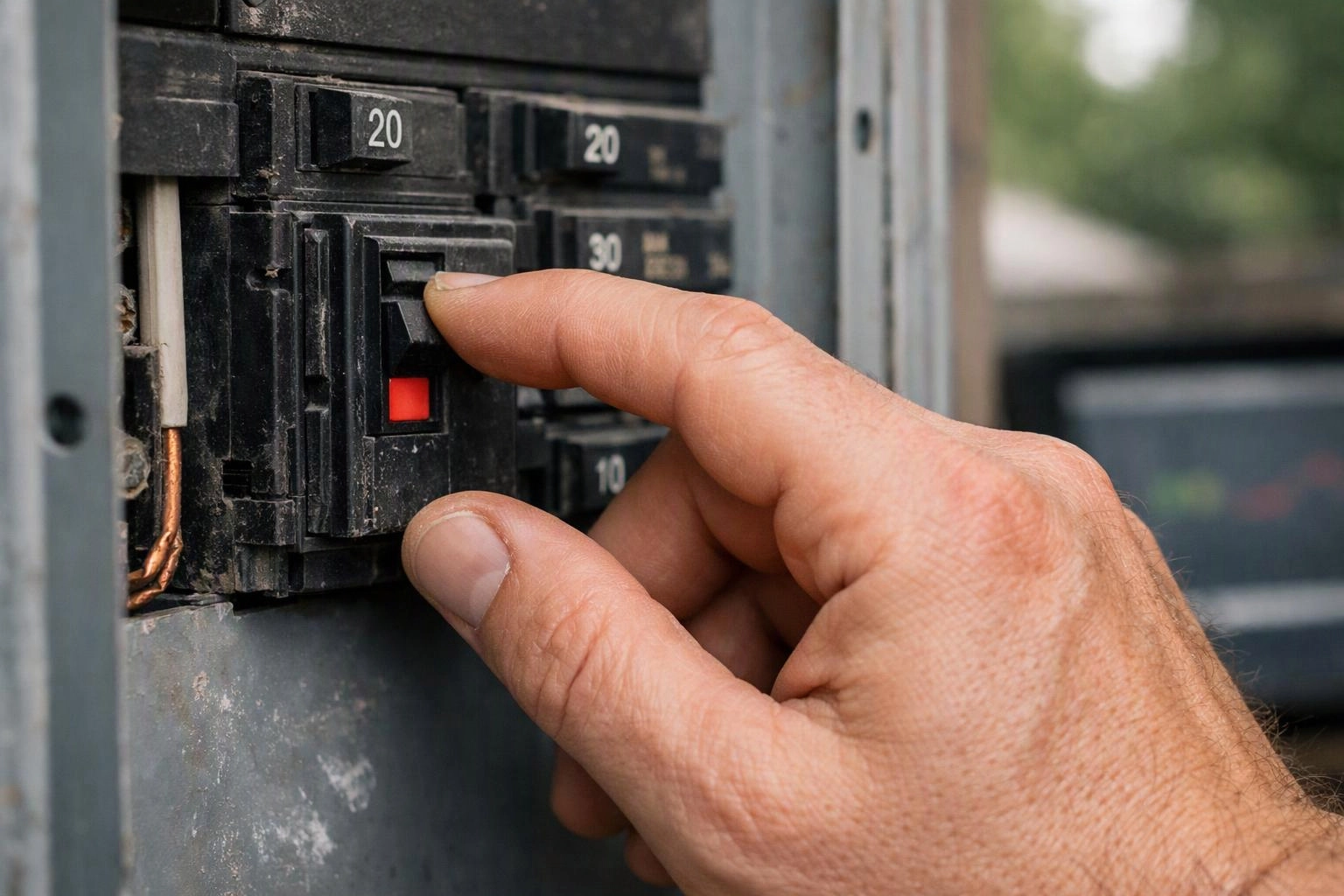
A tripped breaker opens its internal contacts when current rises beyond the circuit's safe operating condition. The breaker responds to heat from sustained overloads and to sudden fault current. Opening the circuit stops electricity at the panel, which protects the conductors from continued stress.
Related glossary terms: Circuit, Electrical Load, Electrical Short.
The handle may appear off, or it may sit between on and off. A complete reset usually requires moving the handle fully off before returning it to on. If the breaker trips again, the circuit may have a damaged wire, a faulty device, or too much connected load. An electrical short creates a low-resistance path that can produce a fast trip, while a thermal overload develops through sustained heating. Testing helps separate a breaker problem from a circuit problem.
From the Service Electric team
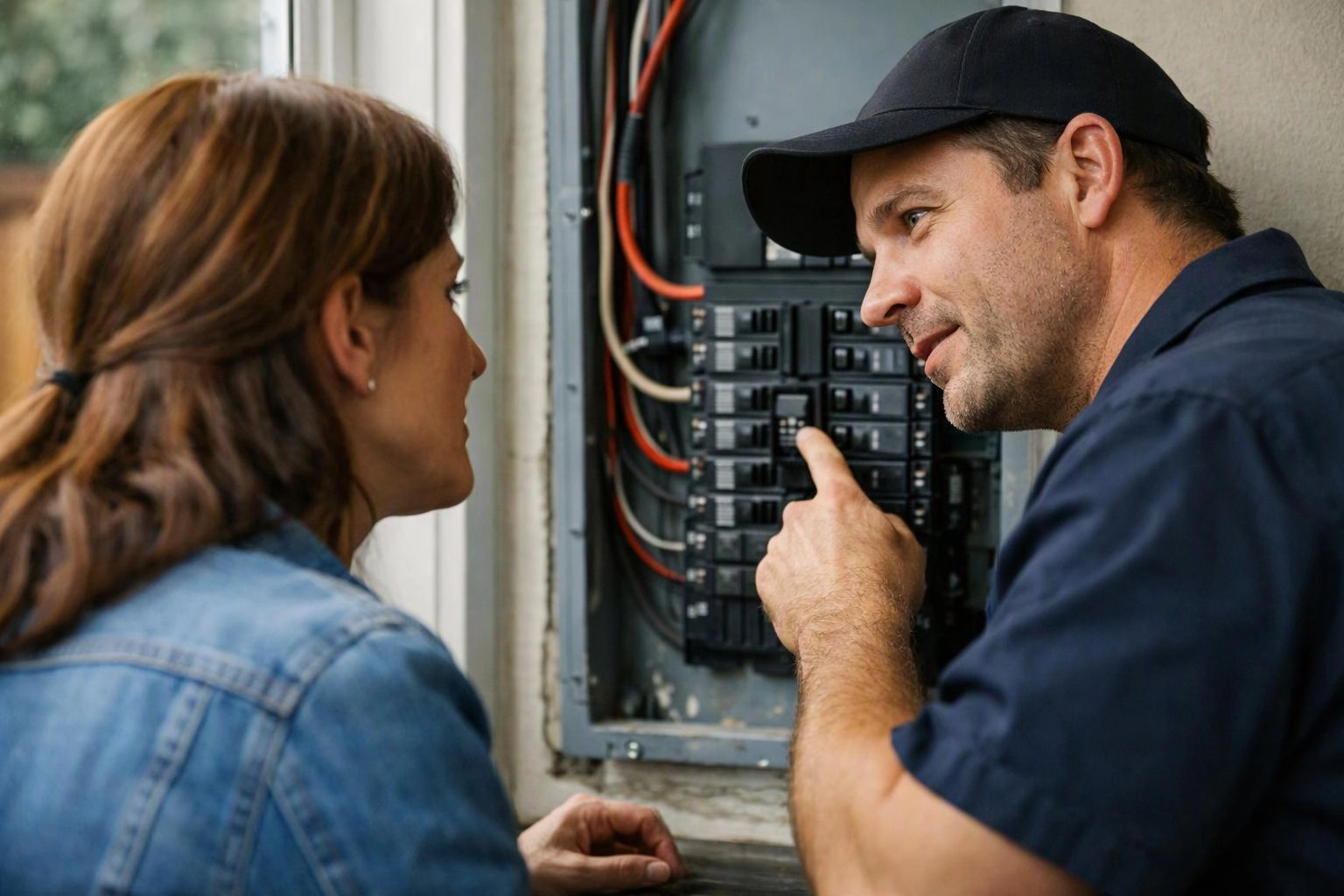
When we inspect a tripped breaker, we check the panel, connected circuit, and visible wiring for signs of overheating or damage. We also look for conditions that could cause another trip, such as a faulty device or excessive load. Our team treats repeated tripping as a troubleshooting issue, not a routine reset.
Tripped Breaker in Practice: A Real-World Example
A kitchen circuit trips when several appliances operate together. A technician checks the breaker, receptacles, wiring, and connected appliances to determine whether the cause is an overload or a fault.
Related Services
Related Terms
Circuit
A circuit is a complete path that allows electrical current to move from a power source…
Electrical Load
Electrical Load is the total demand that connected devices place on an electrical system at a…
Electrical Short
An electrical short is an unintended low-resistance path that lets current bypass the normal circuit route…
Thermal Overload
Thermal Overload is a protective condition in which excessive current or heat causes a motor circuit’s…
Service Electric
Have Questions About Tripped Breaker?
Contact Service Electric for practical guidance on Tripped Breaker and related 24 hour electrician work in Victoria.