
What Is Thermal Overload?
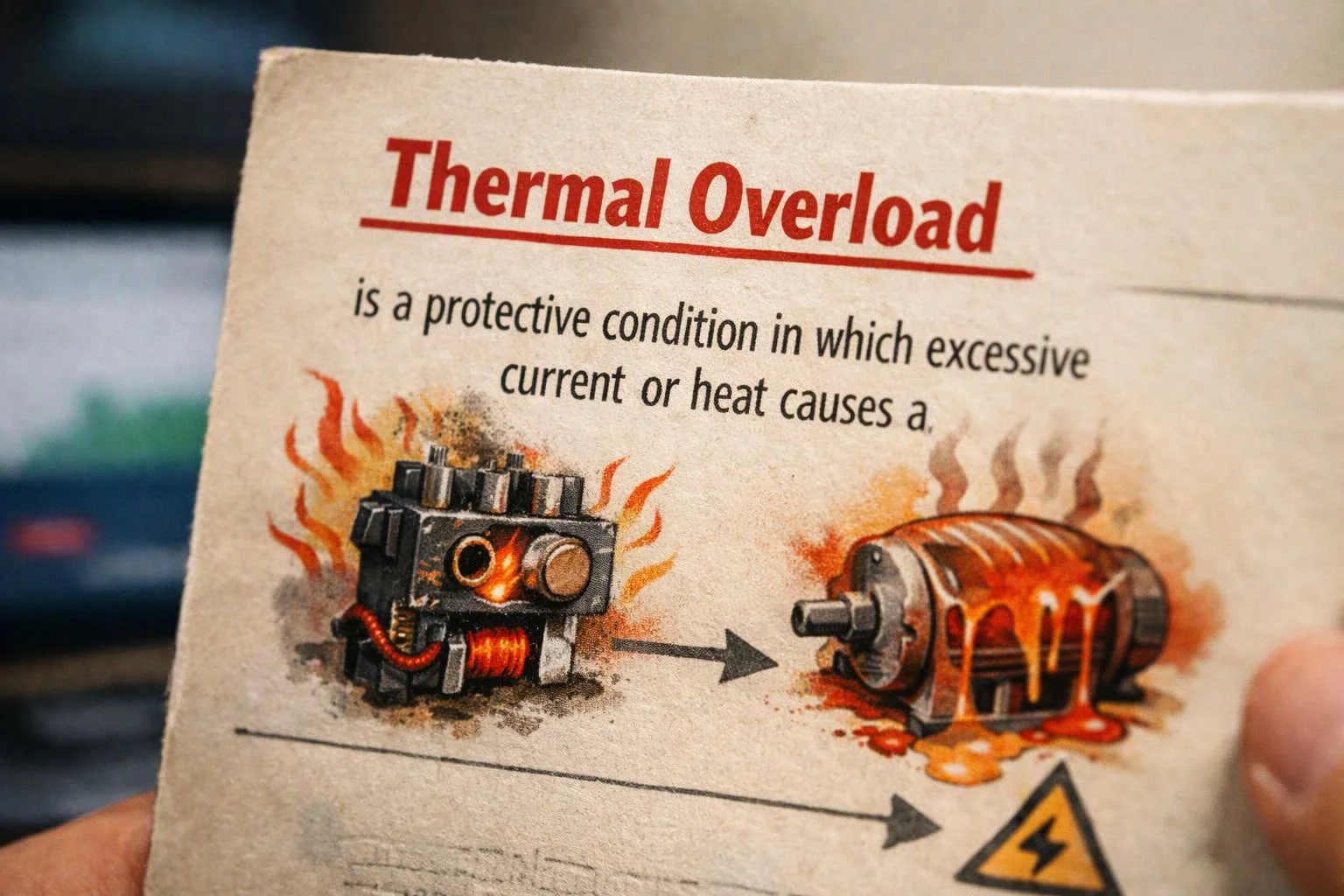
Thermal Overload is a protective condition in which excessive current or heat causes a motor circuit’s overload device to open. The device interrupts power before sustained overheating damages motor windings, conductors, or connected equipment. Thermal overload usually develops from prolonged overloading, restricted cooling, mechanical strain, or an electrical fault that raises operating current.
Quick Facts About Thermal Overload
Category
Motor circuit protection
Used for
Limiting damage from sustained overheating
Common confusion
Short-circuit protection
Also called
Overload Protection, Motor overload
Often discussed with
Commercial Electrical Repair
Key Takeaways About Thermal Overload
- Thermal overload responds to sustained heating, not every brief current surge.
- Repeated trips can point to mechanical strain or an electrical fault.
- An overload device is not the same as a short-circuit breaker.
How Thermal Overload Works
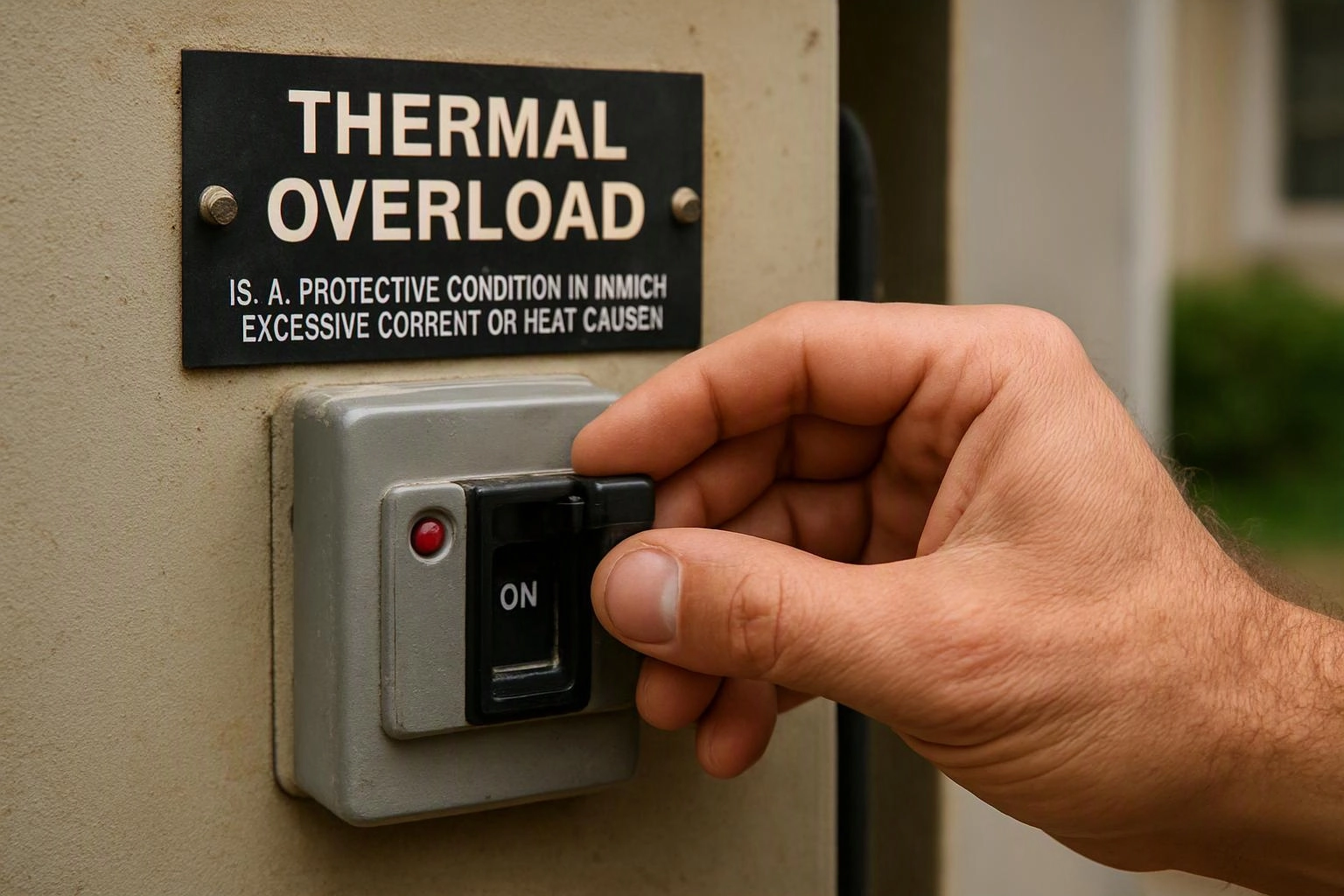
Thermal Overload protection monitors the heat created by current flowing through a motor circuit. An overload relay may use a heat-sensitive element that bends or changes position as temperature rises. Once the operating condition exceeds the device setting for long enough, the control circuit opens and the motor stops.
Related glossary terms: Electrical Load, Circuit, Tripped Breaker.
The response depends on sustained heating, so a brief starting surge may not trip the device. Repeated operation can indicate an overloaded motor, poor ventilation, mechanical binding, loose connections, or incorrect protection settings. A motor overload relay commonly works with a contactor, while a circuit breaker provides separate protection against short circuits and severe overcurrent.
From the Service Electric team
When we inspect thermal overload on a commercial electrical repair, we check the motor circuit, overload device, connections, and equipment condition together. We also look for repeated trips caused by mechanical resistance, poor cooling, voltage problems, or an incorrect setting. Resetting the device alone does not identify the cause.
Thermal Overload in Practice: A Real-World Example
A commercial exhaust fan may stop after running under heavy resistance because its motor overload opens the control circuit. The fan can remain unavailable until the underlying restriction or electrical problem is corrected and the protective device is reset.
Related Services
Related Terms
Electrical Load
Electrical Load is the total demand that connected devices place on an electrical system at a…
Circuit
A circuit is a complete path that allows electrical current to move from a power source…
Tripped Breaker
A tripped breaker is a circuit breaker that has opened a circuit after sensing excessive current…
Voltage Drop
Voltage Drop is the reduction in electrical pressure that occurs as current travels through a conductor…
Service Electric
Have Questions About Thermal Overload?
Contact Service Electric for practical guidance on Thermal Overload and related 24 hour electrician work in Victoria.