
What Is Wire Gauge?
Wire Gauge is a measurement system that identifies a conductor's size and helps determine how much electrical current the conductor can carry. The gauge describes the conductor itself, not the insulation color or cable covering. Electricians use wire gauge with circuit requirements, conductor material, and installation conditions when selecting wiring.
Quick Facts About Wire Gauge
Category
Electrical measurement
Used for
Selecting conductors for circuits
Common confusion
Gauge number and conductor size move in opposite directions
Also called
Wire Size, AWG
Often discussed with
Electrical Wiring Installation, Electrical Wiring Repair
Key Takeaways About Wire Gauge
- Gauge describes conductor size, not insulation color.
- Correct selection depends on circuit demand and installation conditions.
- A larger gauge number does not mean a larger conductor.
How Wire Gauge Works
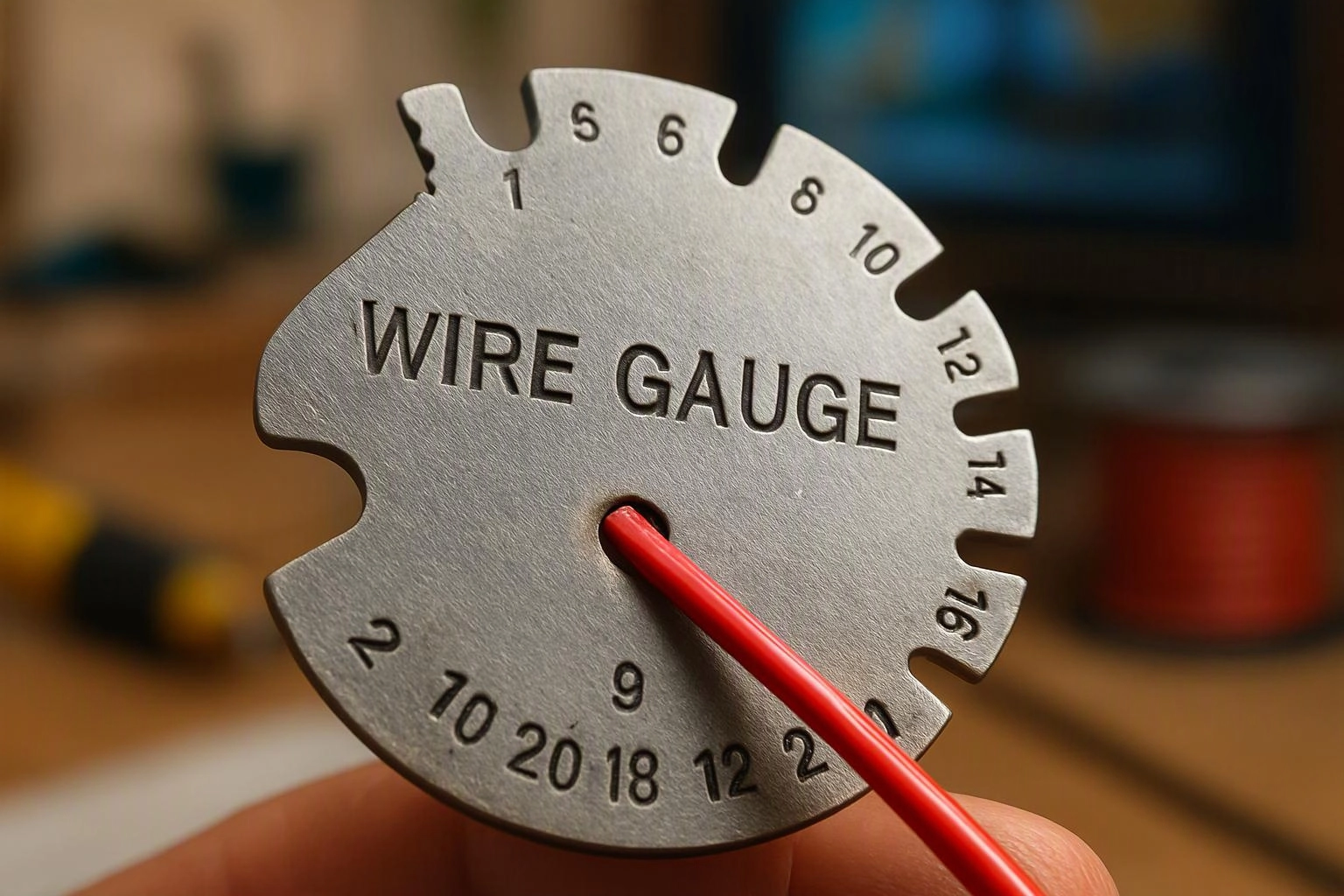
Wire Gauge assigns a size designation to the metal conductor inside a wire or cable. In common electrical work, a larger conductor has a smaller gauge number, while a smaller conductor has a larger gauge number. The gauge applies to the conductive metal, not the outer jacket.
Related glossary terms: Ampacity, Copper Wire, Electrical Load.
Electricians compare wire gauge with Ampacity, circuit demand, conductor material, and installation conditions. A conductor that is too small for its circuit can heat excessively during operation. The selected gauge also affects voltage drop across a long wiring run, especially when equipment draws power from a distant panel. Wire gauge therefore forms part of a complete wiring decision, not a choice based on appearance alone. The conductor must also fit its terminals and approved wiring method.
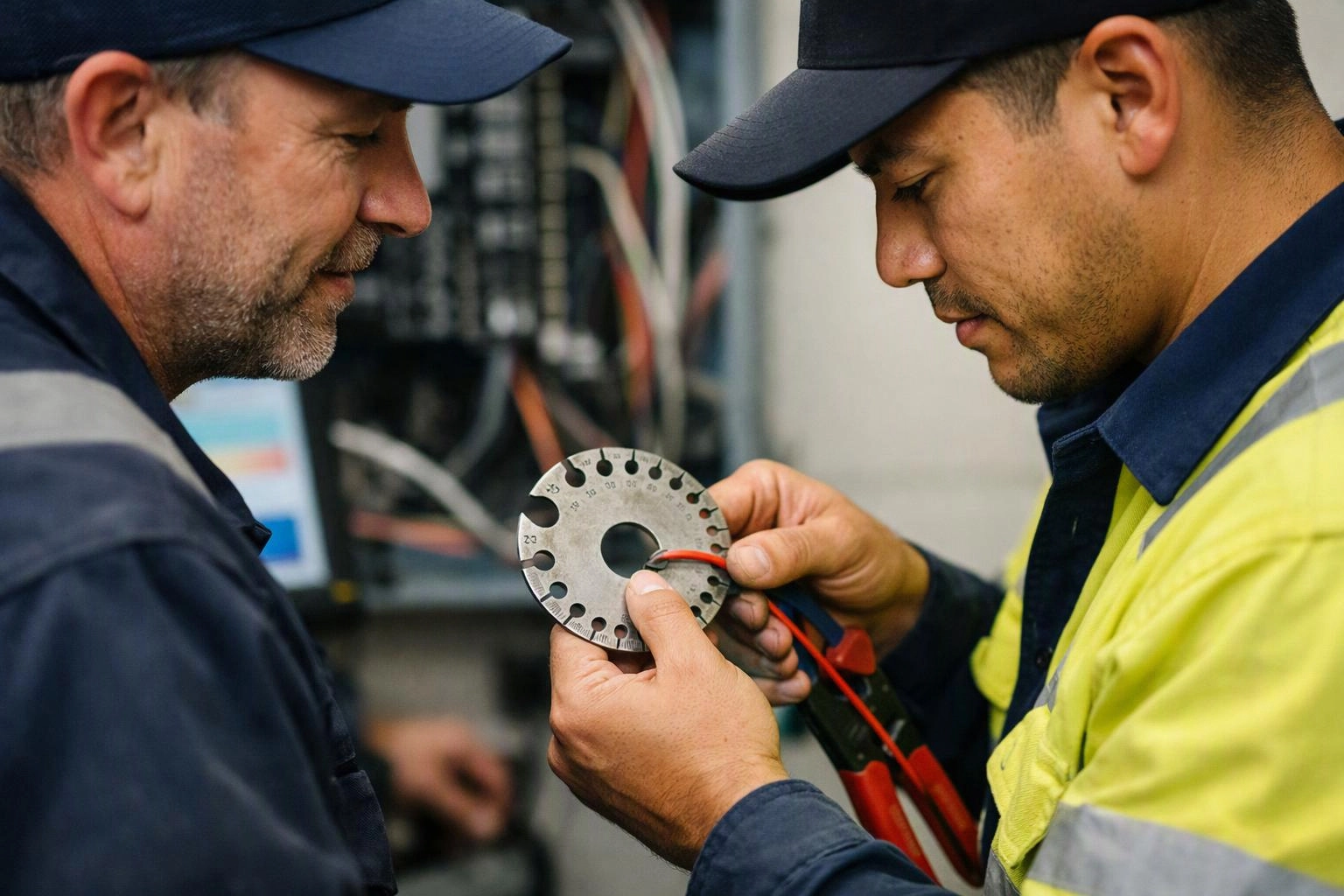
From the Service Electric team
When we install wiring, we identify the circuit demand and inspect the conductor size before making connections. Our team also checks the conductor material, terminal fit, insulation condition, and run length. These checks help us match the installed wiring to the circuit and the equipment it serves.
Wire Gauge in Practice: A Real-World Example
A new kitchen circuit may require a conductor selected for the equipment load and the wiring path. During Electrical Wiring Installation, the electrician matches the wire gauge to the circuit design and confirms that the conductor fits the panel and device terminals.
Related Terms
Ampacity
Ampacity is the maximum electrical current a conductor can carry under stated conditions without exceeding its…
Copper Wire
Copper Wire is a conductive material used to carry electrical current through circuits, equipment, and building…
Electrical Load
Electrical Load is the total demand that connected devices place on an electrical system at a…
Voltage Drop
Voltage Drop is the reduction in electrical pressure that occurs as current travels through a conductor…
Service Electric
Have Questions About Wire Gauge?
Contact Service Electric for practical guidance on Wire Gauge and related 24 hour electrician work in Victoria.