What Is Line Voltage?
Line Voltage is the electrical potential supplied to a building’s wiring system for operating equipment and fixtures. In indoor lighting, line voltage usually reaches a fixture through a branch circuit and connects directly to compatible lamps, switches, or drivers. The term distinguishes building supply power from lower-voltage control or signaling power.
Quick Facts About Line Voltage
Category
Electrical supply characteristic
Used for
Indoor fixtures and branch-circuit equipment
Common confusion
Line voltage is not the same as low-voltage control power
Also called
Mains Voltage, Supply voltage
Often discussed with
Indoor Lighting Installation
Key Takeaways About Line Voltage
- Line voltage powers equipment directly from the building wiring system.
- Indoor fixtures must match the circuit’s voltage and wiring method.
- Line voltage differs from low-voltage control power.
How Line Voltage Works
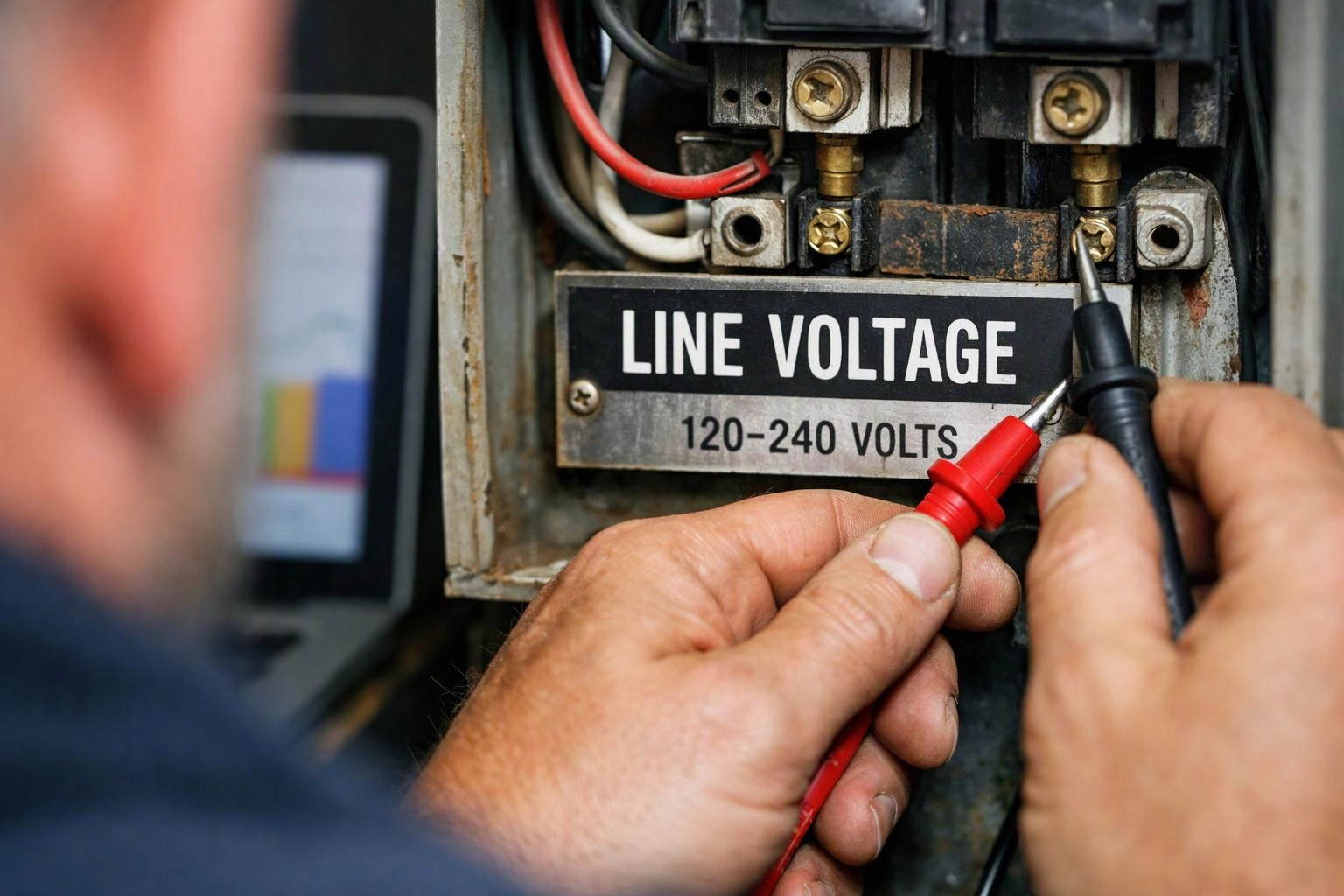
Line voltage travels from the service equipment through branch-circuit wiring to a switch, fixture, or other connected load. A switch controls the circuit path, while the fixture receives power when the circuit is closed. An electrician checks the conductors, connections, and fixture rating as part of the installation.
Related glossary terms: Electrical Load, Hot Wire, Neutral Wire.
Indoor lighting commonly uses line-voltage fixtures that connect directly to building wiring. Some lighting systems include a transformer, driver, or electronic control that changes the power before it reaches the light source. That arrangement makes the fixture’s listed requirements important because a line-voltage switch and a low-voltage control do not perform the same job.
From the Service Electric team
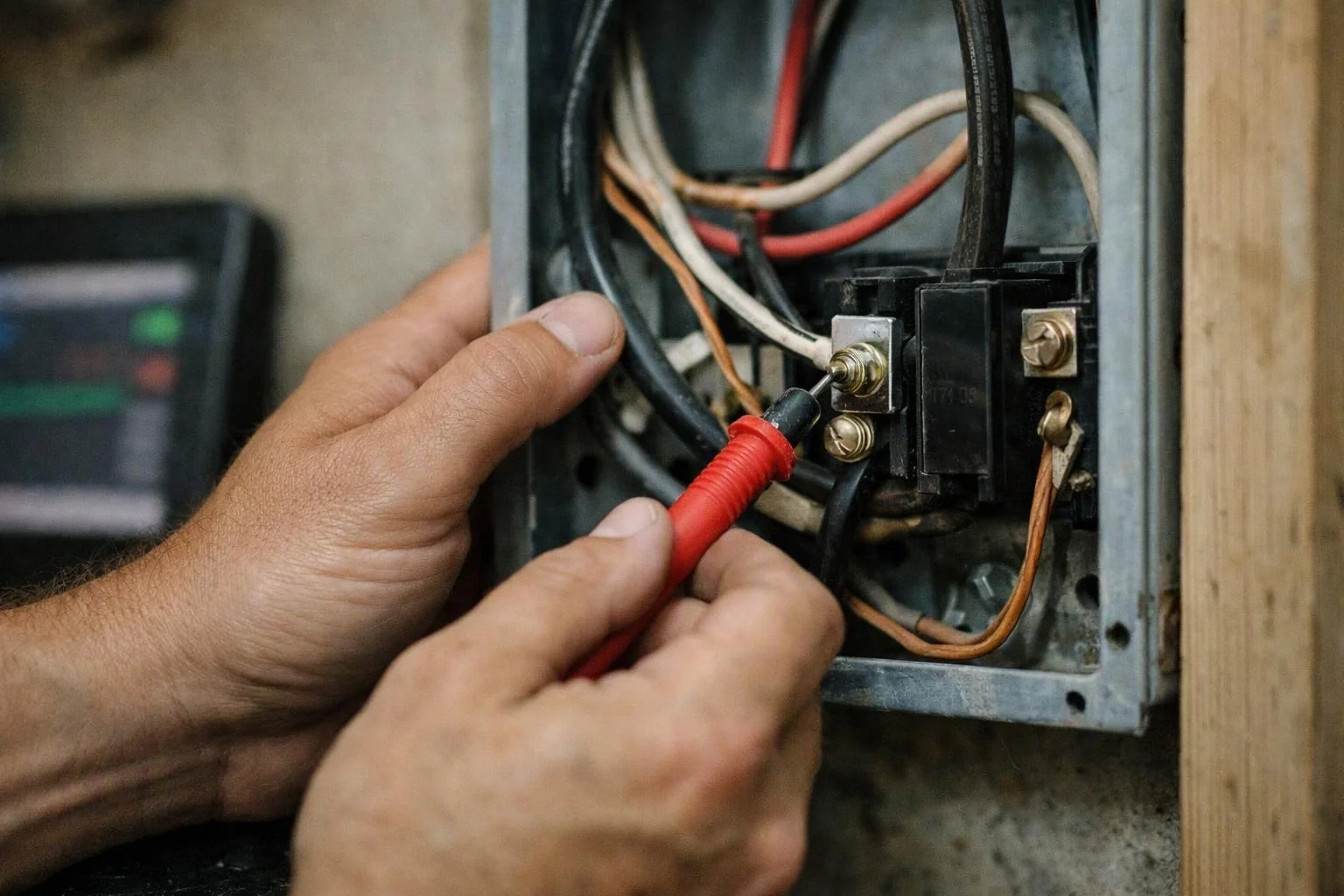
When we install indoor lighting, we identify the circuit conductors and verify that the fixture and controls suit the available line voltage. We also inspect connections inside the box and at the fixture so the wiring matches the planned switching arrangement.
Line Voltage in Practice: A Real-World Example
A homeowner replaces a ceiling light during an indoor lighting installation. The new fixture connects to the existing line-voltage branch circuit, so the electrician checks its rating and the switch wiring before completing the connection.
Related Services
Related Terms
Electrical Load
Electrical Load is the total demand that connected devices place on an electrical system at a…
Hot Wire
Hot Wire is an energized conductor that carries electrical potential from a source toward a load…
Neutral Wire
Neutral Wire is the grounded circuit conductor that carries current back from a connected load toward…
Voltage Drop
Voltage Drop is the reduction in electrical pressure that occurs as current travels through a conductor…
Service Electric
Have Questions About Line Voltage?
Contact Service Electric for practical guidance on Line Voltage and related 24 hour electrician work in Victoria.